
Speaking of Art with Joanne Dugan
By M.Sebastian Araujo
Photography as an ART may been a debatable concept in this world of selfie taking peeps who document each bite of lunch as something worthy of note…until one looks at the work of Joanne Dugan. A Truly unique vision and mastery of the medium that has taken imagery to a new dimension !I have been in awe of her work for quite sometime and recently had the chance to find out just what makes her shutter click!
Joanne Dugan

What in this CRAZY World around us affects your Creativity?
I look regularly and closely at the daily things right in front of me. That is what interests me the most.
What changes do you see in the photography scene these days…?
There has been a wonderful turnaround recently back to the appreciation of handmade photographic images. I’ve always shot with film, and have always worked in a darkroom to make gelatin silver prints by hand. There were many years when this approach was out of fashion, at least for the masses, when giant digital prints kind of took over the gallery world. There is a now a marvelous sense of appreciation for the analog process and this current sentiment has opened up a lot of new doors for my work. It’s been a wonderful lesson in trusting in what you are intuitively drawn to do, rather than trying to follow a trend.
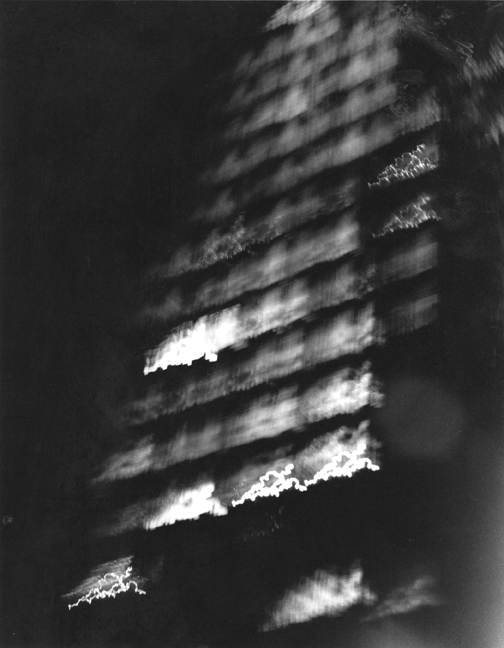
30th Street and Third Avenue, facing East, 8:19pm,” NYC
What in your daily Life inspires your work?
My approach to my work is about continually taking what’s right in front of me and seeing it in a new way. I am most intrigued by subjects that are considered “daily,” as opposed to things that are sensational or overly beautiful or ugly. Many photographers rely on the discovery of subject in order to create an image. I like to work differently than that, in order to pursue images that are more about what a thing or a place feels like, rather than just what it looks like.
A mentor of mine named Sean Kernan talked about the fact that when working with photography, that it’s important to distinguish between the subject “doing the work,” as opposed to the photographer doing it. I like to be the one to do the do the work to transform something that is simple and daily into something that is profound. If it’s just about subject, then it just feels too easy.
If I had to pick one thing that inspires me the most, I would say that it’s light. I always approach any situation by looking at the light first. Then I think about subject. It may sound obvious, but looking at the light first is an easy way to start the process of truly looking.
Some people wait to be inspired before doing anything creative, when in fact the inspiration often doesn’t come until after the working process begins. My favorite quote about that is by the composer Ernest Newman: “The greatest composer does not sit down to work because he is inspired, but becomes inspired because he is working.”
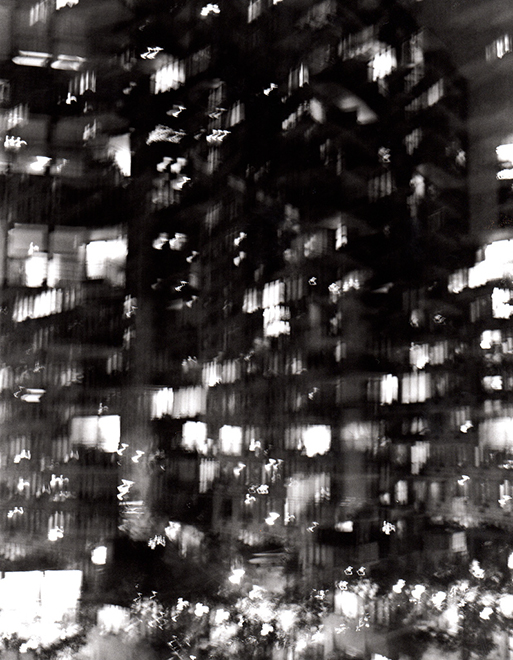
Rooftop on 34th Street, facing North, #01, 8:52pm,” New York City, 2013
Was there a “shining lightbulb” moment in your career when you realized that you were an artist? If so what was it?
I’ve had a lot of literal “shining lightbulb” moments. My earliest creative memory involves a actual bulb, a red glass one on a Christmas tree to be exact. I sat on the floor as a child and watched the reflection of my then-baby sister, crawling past. Her reflection was curvy and distorted and incredibly intriguing. It was then I realized that where and how you looked was at important as what you actually saw. I think I was about four years old at the time.
My most recent project, called “Turning Point,” is also about shining lightbulbs. The images are the result of being in the six-day blackout in New York City during Hurricane Sandy in 2012. I emerged from that scenario with a new appreciation for the wonder and fragility of electric light and have been creating images as a response ever since.
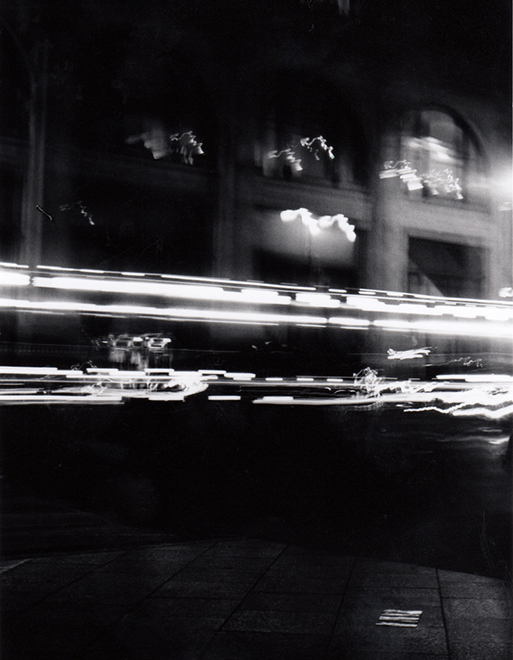
Corner of 34th Street and 5th Avenue, facing North, 9:06pm” New York City, 2013
How do you know just when to click the shutter on your camera?
There is no one right moment, contrary to what Henri Cartier Bresson says about “the decisive moment.” I like to think of a camera as being like a musical instrument and the resulting images as being like songs. You have to keep practicing and repeating to get to a place when it all comes together. I find that I have to be wide open emotionally in order to create work that matters to me. It takes a lot of energy to simplify things down to their core elements, and this is where I think the best work lives.
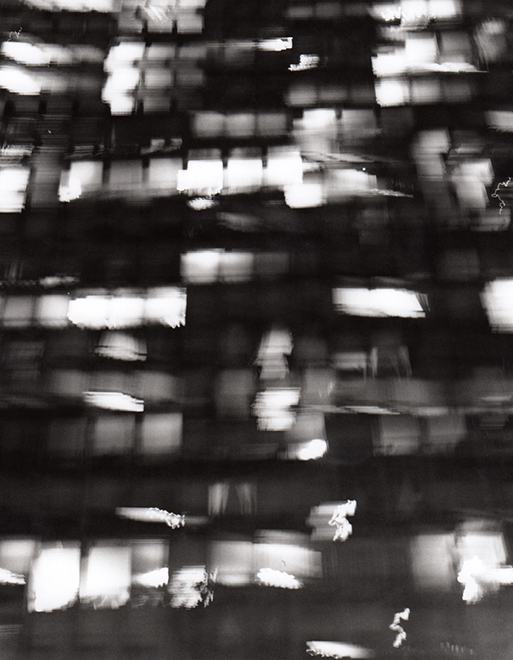
33rd Street between 2nd and 3rd Avenues, facing South, #2, 10:10m,” New York City, 2013
What is it about Ptown that keeps you and other creative people living there or coming back ?
I consider Provincetown a creative muse. I know I mirror the thoughts of many other artists when I say that the light here is unlike anywhere else. I originally came as a child when my family summered in Orleans and then drove up to the wild lands of Provincetown for some action beyond family time on the beach. That summer I bought a pair of sandals made out of tree bark and was permanently hooked.
As an adult, my creative turning point in Provincetown came when, in the off-season, a dear artist friend at the end of Commercial Street handed me the keys to his 19th century house and said, “Please stay here for as long as you want and make new work.” That was many years ago and I’ve been coming back ever since. And I think that Hatches Harbor is the closest thing to heaven here on earth.
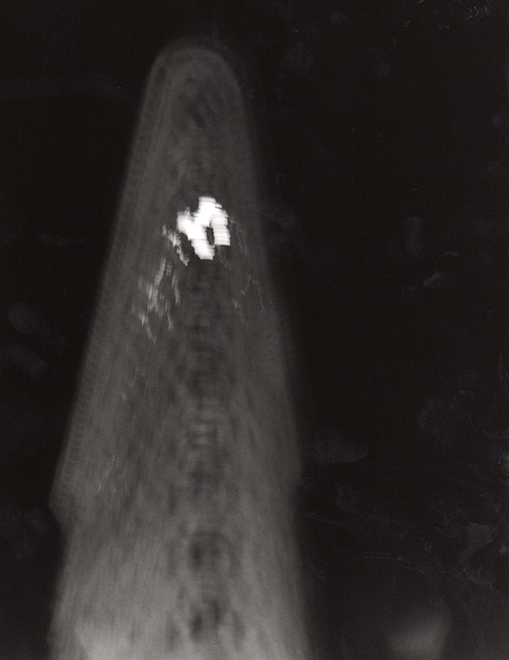
Corner of 23rd Street and Broadway, facing South, 12:02am,” New York City, 2013
Time and Tide come and go here in Provincetown. Each Season bringing its own vibes…Nice to see that amid it all ART and those who create it are always a permanent in this ever changing world!
About the images “Turning Points” by Joanne Dugan. Created after the blackout in NYC in 2012, this series explores the vulnerability and fragile nature of artificial light in the modern urban environment. Archival handmade gelatin silver prints.
For more information please check out the following:
 0
0

 0
0