

Provincetown, bonjour
1-06 Impromptu No. 3 in G-Flat Major
West Beach, 5 am, in memory of Brigitte Engerer.
Provincetown, 5 am

1-06 Impromptu No. 3 in G-Flat Major
West Beach, 5 am, in memory of Brigitte Engerer.
Provincetown, 5 am

Provincetown Art Association and Museum (PAAM)
Founded in 1914 by a group of artists, including Hawthorne, to collect, exhibit and honor the work of Provincetown’s growing arts colony. Today, PAAM houses one of the most important 20th century American art collections, including Hawthorne’s “His First Voyage,” and white-line woodblock prints known as the Provincetown Print developed by B.J.O. Nordfeldt and his followers. PAAM is also the country’s first green art museum as well as a learning center providing affordable arts instruction, an association for professional artists, a research center and venue for film screenings, concerts, auctions and lectures. (www.paam.org)
Fine Arts Work Center (FAWC)
Fine Arts Work Center (FAWC) In addition to its renowned Fellowship Program for emerging artists and writers, FAWC offers summer workshops in creative writing and visual arts, year-round readings, free, public lectures and gallery shows, and Cape Cod’s only MFA in visual arts in collaboration with the Massachusetts College of Arts. FAWC is located on Pearl Street in historic studio space once occupied by Hans Hofmann, Robert Motherwell, Helen Frankenthaler, and many other iconic figures in the annals of Provincetown arts. (www.fawc.org)
Pilgrim Monument and Provincetown Museum (PMPM)
Pilgrim Monument and Provincetown Museum (PMPM) Although the Pilgrim Monument and Provincetown Museum is not an art museum in the traditional sense, the permanent collection includes some extraordinary artwork and tells the history of Provincetown’s art colony. On display are several monumental paintings from the Town of Provincetown Art Collection, including Charles Hawthorne’s masterpiece, “The Crew of the Philomena Manta.” Other permanent and changing exhibits feature the development of the theater, whaling, maritime and fishing industries in Provincetown from the arrival of the Mayflower Pilgrims to the present day. (www.pilgrim-monument.org)
Provincetown Theater
Provincetown Theater Continues the legacy of Eugene O’Neill and Tennessee Williams by mounting plays and musicals of established and emerging American playwrights. (www.provincetowntheater.com)
Gallery Strolls
Gallery Strolls Commercial Street is lined with privately owned art galleries, which host Gallery Strolls every Friday night during the summer. These festive open houses allow arts enthusiasts to browse and meet local and visiting artists and gallery owners. (www.provincetowngalleryguide.com)
ARTS EVENTS OF NOTE
• Provincetown International Film Festival – June (ptownfilmfest.org)
• Provincetown Jazz Festival – August (provincetownjazzfestival.org)
• Musicals, plays and Broadway shows – June – September (provincetowntheater.com)
• Tennessee Williams Festival – September (twptown.org)
• Provincetown Music Festival – September (provincetownmusicfestival.org)
• Gallery Strolls – Friday evenings, June – September (provincetowngalleryguide.com)
Provincetown & the Arts America’s oldest art colony Provincetown’s celebrated reputation as the nation’s oldest art colony began when painter Charles Webster Hawthorne arrived in Provincetown in 1899. Shortly thereafter, he founded the Cape Cod School of Art, where he taught painting for the following 30 summers.
Prominent art students and teachers were also drawn to Provincetown for the beautiful light, natural landscapes and rustic scenes. They followed Hawthorne to Provincetown, eventually establishing their own schools. The new art schools and art movements spawned a year-round arts community of young, aspiring artists working under the watchful eyes of established mentors and teachers. In 1916, The Boston Globe ran a frontpage story titled, “Biggest Art Colony in the World in Provincetown.” Hans Hofmann, Franz Kline, Mark Rothko, Blanche Lazzell, Milton Avery, Jack Tworkov and Edward Hopper were simply a handful of well-known artists with ties to Provincetown. Provincetown is also associated with the birth of modern American theater. Eugene O’Neill, considered the father of modern American theater, mounted his first play on an East End Provincetown wharf in 1915. Today, the tradition is carried on at Provincetown Theater, the well-known venue featuring The New Provincetown Players Theater Company. Writers like John Dos Passos, Weldon Kees, Tennessee Williams, Truman Capote, Norman Mailer and Michael Cunningham found inspiration in Provincetown. Many actors and musicians, including Billie Holiday, Marlon Brando, Al Pacino, Richard Gere, Julius Monk, and Barbra Streisand, spent their early years performing on Provincetown stages.
Today, Provincetown remains a haven for artists in every medium – painting, sculpting, theatre, writing, and music. The vibrant arts community, atmosphere of experimentation, vast teaching and learning opportunities, and palpable energy draw artists year after year to share and deepen their talents.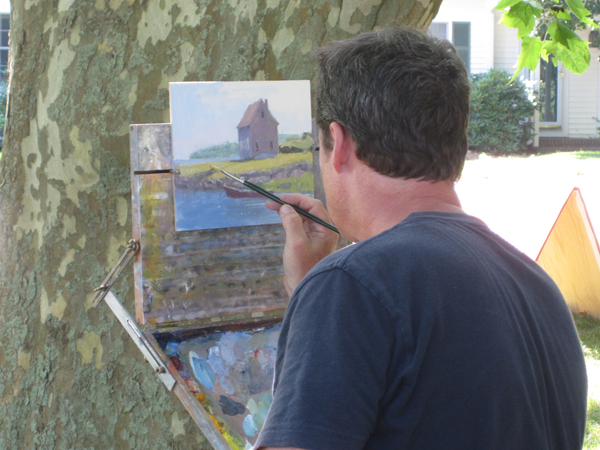
« It is one of the place in the world you can disappear into. It is the Morocco of North America, the New Orleans of the north » Michael Cunningham

Welcome to Provincetown, one of the most different and extraordinary areas of the United States, situated on a stretch of sand surrounded by water at the tip of Cape Cod. The simplest way to get there is to take Route 6 to the end, at 42 degrees north, 70 degrees west. You’ll find a blend of Greenwich Village, New York and Key West, Florida. A tourist destination for 100 years, this small coastal New England town always attracts artists, authors, and lovers of nature on a quest for beauty, solitude, and light. Only 50 miles by boat and 100 miles via car from Boston, “Ptown – its local nickname – is a popular destination for a number of vacationers. Also one of the preferable destinations for gays and lesbians, because of its tolerance, the town breathes the freedom of itself. Its two main “arteries”, or streets, are Commercial Street with its bordering restaurants, charming hotels, boutiques; the second is Bradford Street, which is more tranquil and sets the tone of the natural and sumptuous protected lands that surround it. In the summer, the town becomes a chic enclave, at once wild, urban, and bohemian with its hipster bars and artistic and vibrant life. Culturally, Provincetown is a concept, a vivacious idea, an institution of thought, a place for free imagination, creativity, pleasure, liberty, and equality.
Though it can be a little crazy in the summer, Provincetown is anchored in the history of the United States: it was November 11th, 1620, when the Founding Fathers/Pilgrims of the Mayflower ship threw their anchor in the port of Provincetown. They explored the region for five weeks before following their research in finding a site more favorable to establish a colony. It was here that the Pilgrims wrote and signed the Mayflower Compact, considered as the first document in the New World, shifting towards a new democracy. The first habitants of the town made a living by commercial fishing, and it was these Portuguese fishers principally from the province of Açores, who arrived in great numbers to profit from the flourishing fish. Today the Portuguese community is very present, for example, in the Provincetown Portuguese Festival, which takes place in June. Provincetown became a tourist town in 1899, when Charles Hawthorne opened the School of Art there, taking with him hundreds of artists from Greenwich Village in New York. Following actors and writers, who comprised of Eugene O’Neill and Susan Glaspell, started plays in Provincetown and contributed to the birth of American theater. In the 1940s and ‘50s, the discotheque of Provincetown hosted artists such as Ella Fitzgerald and Billy Holiday. Montgomery Clift, Marlon Brando, and Richard Gere performed at certain moments in their career here. Pulitzer Prize laureate Norman Mailer wrote one of his cult novels in Provincetown. All of these events and these people created a constant flux of progressive thought; these liberal and sometimes revolutionary ideas that continue to nourish the creative motor of the oldest artistic colony in America. This equally created an environment that is not only tolerant and accepting, but also celebrates gay, lesbian, bisexual and transgendered life, well before most other areas in America, witnessed by the world.
The crucial presence of the LGBT community is apparent in the history of this town. Poet Edna St. Vincent Millay, a precocious feminist, appreciated the open sexuality of the town, where she and her husband explored the ideas of “free love”, well before the hippie era. Tennessee Williams fell in love for the first time in Provincetown, and came here regularly to heal his broken heart from numerous lovers. Mary Oliver, Pulitzer Prize winner, wrote about her relationship with her partner here unlike Nobel laureate Michael Cunningham, who describes with verve and brilliance the experience of gay men in his worldwide famous novels. Provincetown is not just a “gay tourist town,” rather, it is an important melting pot of LGBT culture through a social, artistic, and political lens.
All that being said, Provincetown is a small and agreeable town for whoever likes freedom, culture, nature, simple pleasures, and whether one is heterosexual, homosexual, single, in a couple, with a family. So, the day can be centered around visits to art galleries, listening to writers’ conferences, or eating in some of the best restaurants of the region; the visitor can also spread him or herself out on miles of magnificent beaches, amuse oneself at the daily Tea Dance, and meet such a mixture of different people. The night offers all the amusements you can imagine: drag queen shows, magicians on the street, Thorton Wilder productions, concerts of the best underground artists…While Provincetown has several faces following the seasons – a year-round population of 3,500 people – the town reaches 50,000 regularly in the summer. Amongst the tranquil nonchalance to a buzzing hum, this transfiguration succeeds and is magical because, despite coming from different social and cultural classes, people are lively, working and playing together to create one of the most dynamic and diverse communities in America. Naturally beautiful, its abounding culture and entertaining scene, three miles charged with art galleries, shops, restaurants, and a variety of lodging options, Provincetown is an area amazing to visit and to explore. You will just love it!


The Truro Center for the Arts is pleased to announce the publication of its new catalog that includes an extensive Spring, Summer & Fall schedule of creative workshops, topical lectures, poetry readings, contemporary art gallery exhibitions and New Culinary and Garden Arts workshops for the 2013 season. Executive Director Cherie Mittenthal stated that she has 36 new and renowned visual artists, writers, poets and authors coming to the outer Cape for Castle Hill’s exciting educational season. “This year there will be courses never before offered at our campus”, according to Mittenthal. With over 145 diversified artistic opportunities; such as Painting Frescoes, with Michael Biddle, Pictures that Tell a Story, “Children’s Book Workshop”, with Steve Light, Drawing for Fun, with Rebecca Doughty and even Fred and Ginger’s Greatest Hits Film Class, taught in July by Marc Strauss.
Many New Inventive Workshops along with Signature Art Class Offerings
Among the many new classes this Summer at Truro Center for the Arts are: Beyond Plein-Air, with Christopher Volpe, a painter and art historian from New Hampshire, who will teach an outdoor painting class that pushes beyond the imitation of nature and explore the expressive use of design and color. Daphne Confar, a portrait artist from the outskirts of Boston, will teach; More than a Portrait, and will help students work past the “nice” portrait, to make a portrait painting that has psychological impact. Adam Lowenbein, whose work is exhibited in New York, and has appeared in the New York Times Magazine, will teach, Mixed Media and Painting where students will learn how to explore the use of photographs, fabric, paper, with paint to make 2D or 3D work. Daniel Heyman will teach Monoprints on Plaster, a technique that is half way between fresco painting and monoprint.
Returning to Castle hill are many local artists who have taught at the center, including Truro resident and artist; Nancy Ellen Craig, who will teach a four day workshop called Painting the Figure from the Model. Craig is Castle Hill’s honored ELLA JACKSON CHAIR this year and renowned for painting portraits of the famous including; Edwin Dickinson, Frank Lloyd Wright, Hans Hoffman and Norman Mailer. Mark Adams from Provincetown returns to take you drawing and painting on your kayak – a perfect Cape Cod experience.
Well known installation artist Judy Pfaff returns to each a week long intensive in July and her colleague and friend, Joan Snyder, returns to Castle Hill in August, to teach a painting class called The Anatomy of Your Painting. Local Truro pastel artist, Amy Sanders will teach a week long class on the Exploration of Vibrant Realism in Pastel that will reveal a variety of technical tricks that make the process of using pastel easier.
Philadelphia artist Stuart Shils, returns in September to teach his three day workshop called The Perceptual Moment. He will give a lecture on September 19th, the Thursday night before the workshop that weekend. That same weekend, Ken Kewley, also from the Pennsylvania Academy of Art, will teach a class called: From the Literal to the Poetic: Working from the Model, Drawing, Painting, Collage and Sculpture.
Castle Hill is well-known for its ceramics department and has full slate of recognized ceramic artists teaching all season long. Just to name a few of the highlights for the summer, potter Jack Troy, is the Mary Lou Friedman Chair this year and will teach Wood Firing and Studio Workshop; Collaboration with Earth Fire and Spirit.
Bob Green, a ceramic artist and educator from Western Massachusetts will teach Raku Firing and Forming, the magical 16th century Japanese firing process which is closely associated with Zen Buddhism. Susan Rawcliffe will teach a class called SoundWorks in Clay, how to make musical instruments out of clay. A variety of flutes, whistles, and sound sculptures will be made. Guy Wolff will his famous archetypal pottery; crocks, bottles, jugs, and bowls. He is a frequent guest on the Martha Stewart show and is teaching a two day weekend workshop in September.
This year the writing department will feature a class by inaugural poet Richard Blanco, who will run a poetry Master Class on June 20th from 1-4pm. Other poets who are teaching this summer are; Peter Campion, Mark Doty, Martin Espada, and Robert Pinsky. The writers include playwright; Wendy Kesselman, and authors; Mary Dearborn, Anne Bernays, David Unger, Judy Huge, Michael Klein, Sinan Unel, and Tony Kahn.
Culinary & Garden Arts, Photography, Jewelry, Teen & Kid Classes and Classes for the Whole Family

The culinary and garden art workshops are all new at Castle Hill this year. Paula Marcoux, food editor and columnist at Edible South Shore, will give a workshop on Building an Earthen Oven in early June. Go to the website for a more complete listing of all NEW Culinary and Garden Arts classes. Outer Cape raw Chef, Katherine Reed will teach a class; From Bean to Bar in June. Chris Murphy will share his knowledge about Cape Cod Organic Gardening with a garden prep workshop this Spring and a follow up class in the fall for the harvest season.
Local artist and internationally recognized designer, Sally Bridge, will teach single two-hour afternoon classes that the whole family can participate in together, such as: Kids Family Portrait, Paint Who You Love!, Reclaim/Recycle Old Chair! and Textile Stamping to Make a Swanky Castle Hill Beach Bag! Each are held in the afternoon on various Tuesdays this summer, from 3-5pm and all ages are welcome. Teens, can participate in a self-portrait class with a twist. They will combine the language of drawing with text to create autobiographical mixed media work. Artist, Teresa Bonillo, will teach teens to either make a painting with text or a turn a book with text into a sculpture using mixed media and paint in a class called, The Marks You Make, The Stories You Tell; Mixed Media.
Castle Hill offers many more classes in clay, calligraphy, photography, printmaking, puppetry, sculpture, drawing, felting, fiber art and music making with storytelling for the very young, middle school age or high school student to choose from. All other classes including printmaking, photography and jewelry workshop descriptions with teacher biographies can be found on our website www.castlehill.org.
7th International Encaustic Conference

To kick off the season, Castle Hill will host the 7th International Encaustic Conference with partner and founder Joanne Mattera, from May 31st to June 2nd at the Provincetown Inn. The keynote speaker at the conference this year is Barbara O’Brien, who is the Executive Director of the Kemper Museum of Contemporary Art in Kansas City. There will be pre and post conference workshops held at the Truro Center for the Arts.
Limited space does remain for the conference. If you are interested in attending please register online at www.castlehill.org or by calling the office 508-349-7511.
Special Events, Topically Relevant Lectures & Poetry Readings
Castle Hill’s popular evening lectured will continue in 2013 with the first of the John Bunker Lecture Series, established by his children in honor of their father, John Bunker. Dr. Bunker grew up in Truro and became the founder of the department of anesthesia at the Stanford University School of Medicine and died in May of 2012. The lectures will address subjects ranging from art & literature to philosophy, politics and opera. Craig Barnes is the first guest of this series that will be held once a year. Craig was a civil rights lawyer, a negotiator of nuclear issues in Moscow and is now an award winning author and essayist on contemporary political issues. His lecture is called: “The True, the Good and the Beautiful, from 500BCE to 2013.” and will be given on June 18th at 7:30 at the Wellfleet Preservation Hall.
For the next lecture Poet Richard Blanco – the inaugural poet for President Obama, will give a poetry reading on June 20 at the Wellfleet Congregational church and in July — the National Book Award winning poet, Mark Doty will be at the Truro Meeting House on July 16th to give a poetry reading at 7:30.
In conjunction with the “Greening” of the Truro Center for the Arts, Environmental activist and founder of 350.org, Bill McKibben will give a lecture on August 11th at Wellfleet Congregational. He is the Woody English Chair this year. His appearance will coincide with the installation of solar panels at Castle Hill. Listing details for all lectures and tickets can be found on-line at; www.castlehill.org. Call 508-349-7511 for more information.
An event free of charge for everyone is our Castle Hill Tag Sale on May 11, 2013. Also the Postcard Art Sale event takes place on Sunday June 30th. A returning and unique fundraiser, it will feature more than 200 4×6 postcard sized works created by prominent local artists, faculty and students. All postcards will be for sale.
Castle Hill’s Summer Party takes place Saturday July 20th. Come join us as we celebrate 42 years of being a community of artists and a world of inspiration. This year Castle Hill will host an Organic Garden Tour on Sunday, July 28th. Please register early – the event sells out quickly. The Castle Hill Live & Silent Benefit Auction Saturday, August 10th and provides guests a chance to acquire coveted pieces of art by artists of local, national, and international acclaim all the while supporting the mission of Castle Hill. POEMJAZZ, returns with Robert Pinsky and Laurence Hobgood on piano & Stan Strickland on Saxophone on August 14, at the Wellfleet Preservation Hall.
Castle Hill’s founder Joyce Johnson received a Life Achievement Award at the sixth annual Creative Conference Collaborative Conference of the Arts Foundation of Cape Cod last month. From its humble beginnings in 1971 when founder Joyce Johnson charged $250 on her new MasterCard to produce the first one page brochure outlining 15 workshops offered by the fledgling school Castle Hill has never looked back. That year, for the first time, students of all ages and skill levels were able to take classes in printmaking, drawing, painting, writing, sculpture, weaving, ceramics, jewelry, wood technology and fencing of all things. Johnson likes to recount how since the very beginning “people of all ages were attracted to Castle Hill as though there was a magnet hidden among the barn’s weathered beams.”
For more information about Castle Hill’s workshops and programs, visit www.castlehill.org, or call (508) 349-2711 to request a catalogue
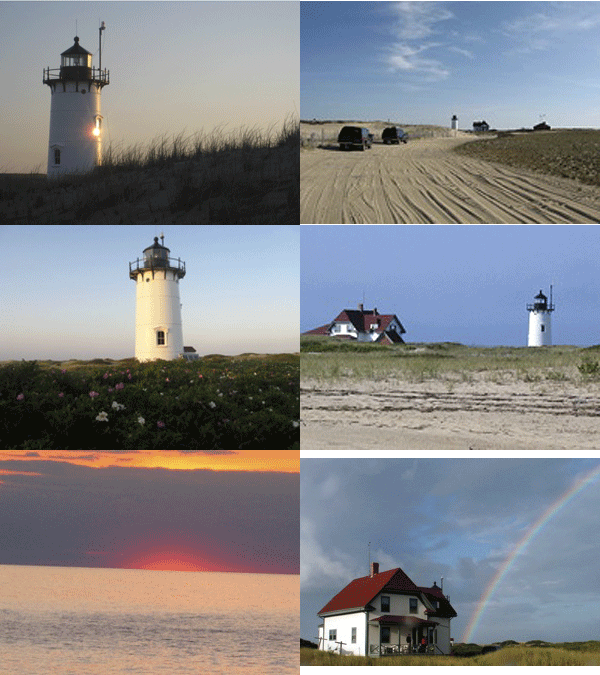
Spend the night in a lighthouse! Operated by the U.S. Coast Guard, the lighthouse is Provincetown’s most spectacular guesthouse, accessible only by dune buggy or foot. Both the Keeper’s House and Whistle Building, which are attached to the functioning lighthouse are restored and fitted to accommodate small groups who want to experience the lifestyle of a 20th century light house keeper.

No visit to Provincetown is complete without seeing the town’s historic and beautiful library. A replica of the famous schooner, The Rose Dorothea, is exhibited in the library, which offers gorgeous views of the harbor. It also contains a great children’s section, is open on Sundays, and offers free internet access. (www.ptownlib.com)

Provincetown is the closest port to the Stellwagen Bank National Marine Sanctuary (SBNMS), a federally protected marine habitat that is home to an amazing variety of marine life, including whales, dolphins, sea turtles, deep sea fish, and sea birds. Its proximity to SBNMS makes Provincetown one the best places in the world to whale watch. Dolphin Fleet Whale Watch, a family run whale watch company since 1975, worked with the Provincetown Center for Coastal Studies (PCCS), an internationally-known marine organization, to develop incredible science-based excursions to SBNMS. Today Dolphin Fleet has its own public education and research program run by Dr. Carole Carlson, a leader in the large marine mammal conservation internationally. Trips are appropriate and enjoyable for people of all ages. (www.whalewatch.com)

The entire Atlantic Ocean coastline of Cape Cod was preserved as the CCNSP by President John F. Kennedy in 1961.
Provincetown is bounded by the sea on three sides at the tip of Cape Cod and two thirds of the town’s natural resources are managed by the Cape Cod National Seashore Park (CCNS). From Long Point to the town line, the Cape Cod National Seashore provides miles of federally protected and preserved seashore, ponds, and woods. The CCNS is run by the National Park Service with the dual goal of protecting precious, ecologically fragile land, while allowing the public to enjoy incredible resources. Opportunities abound for swimming, picnicking, beach walking, dune hiking, biking, bird watching and viewing Ptown’s famous sunsets – one of the few places on the East Coast where it’s possible to see the sun setting over the Atlantic Ocean. Dune tours of the National Seashore are offered by Art’s Dune Tours and are a fantastic way to experience the dune landscape. A tour highlight is viewing the legendary dune shacks that were widely used by playwright Eugene O’Neil and poet Harry Kemp. For the hardy and adventuresome, hiking the dunes on foot is possible by entering at the Snail Road entrance. (www.nps.gov/caco/index.htm) CCNSP is also home to the Old Harbor Life Saving Station, one of three of the original 13 life saving stations on Cape Cod. These oceanfront buildings were equipped to launch a rescue into the surf to pull survivors from sailing ships that had landed on the sand bars 1,000 feet off shore. It is open to visitors and is the only Life Saving Station where life saving history is preserved. A ‘breeches buoy’ rescue is reenacted by Park Rangers every Thursday evening at 6:00p.m. during the summer season. (www.nps.gov/caco/historyculture/old-harbor-life-saving-station.htm)




Just sign in:
